
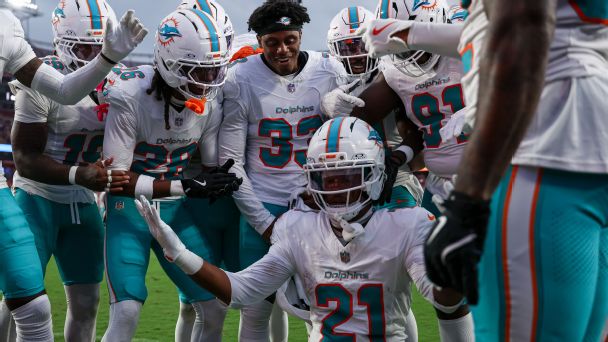
Miami's roster projection for 2026 reads less like a contender's cutdown and more like a teardown notice. The Dolphins are eating a league-record $180 million in dead cap this year, a number that ballooned after they released Tua Tagovailoa in March and ate a $99 million hit on his old deal. Tyreek Hill and Jaylen Waddle are both gone too. Jeff Hafley is running the show now instead of Mike McDaniel. This is not the same team fantasy managers spent three years building rosters around.
The quarterback room settles the biggest open question. Malik Willis, signed to a three-year, $67.5 million deal after Tua's release, is the Week 1 starter against the Raiders and makes the 53 alongside Quinn Ewers, with Cam Miller getting squeezed off the roster. Willis has had a rocky camp by most accounts, and one national writer already floated him among quarterbacks who could lose their job this season. That is not exactly a ringing endorsement for a guy inheriting the keys to an entire offense.
Which brings the conversation to the only Dolphins fantasy asset anyone actually cares about. De'Von Achane leads a running back room that also includes Ollie Gordon II, Jaylen Wright and Carlos Washington Jr., and Miami notably added zero real veteran competition behind him. That is the good news: no timeshare threat, no goal-line vulture waiting in free agency. The bad news is obvious. Achane's game splits touches between rushing and receiving work off play-action and quick throws, and a shaky, downgraded quarterback situation is not the environment that turned him into one of the league's most explosive backs the last two seasons.
The receiver room tells the same story from a different angle. Malik Washington, Jalen Tolbert, AJ Henning, Caleb Douglas, Chris Bell and Kevin Coleman Jr. make up the group, with Henning beating out veteran Tutu Atwell for a spot. Bell, a third-round rookie who tore his ACL at Louisville last November, only recently came off the non-football injury list. Douglas has flashed as a potential lead option in camp, but let's be honest, none of these names move fantasy drafts. That thin, unproven group is exactly why so many of Willis's early-down and check-down reps are likely to funnel straight to Achane out of the backfield.
So where does that leave draft value? Achane is currently going around pick 10 overall and RB6 in PPR formats, per FantasyPros ADP, still comfortably a first-round selection. That price reflects last year's ceiling more than this year's likely offense. Anyone drafting him now is betting on volume and talent overriding a downgraded passing attack, which is a completely reasonable bet given how thin the RB room is and how much target competition just left the building. Just temper the touchdown expectations if the offense sputters behind Willis in obvious passing situations.
The betting market has already priced in the pain. Miami's win total sits at 4.5, with the under juiced to around -175, and books have Miami staring down the second-hardest schedule in the league. That is not a small-sample overreaction; it lines up exactly with a roster that traded away or released three of its best offensive players in a single offseason. Fantasy managers should treat Achane picks the same way the sportsbooks are treating Dolphins wins: real talent, tough context, price accordingly.
The follow-up storylines write themselves. Watch whether Ewers pushes Willis for real reps if the offense stalls out of the gate, because a change under center would immediately shift Achane's efficiency projections either direction. Keep an eye on Douglas and Bell in the receiver room too. If either one pops early, it takes some pressure off Achane to be a checkdown machine and could actually stabilize Miami's passing game enough to make this offense playable in more than just garbage time.