






SEC's NFL-return ban sparks contempt fight over Louisiana TRO

TLDR: Attorney Ryan Downton says the SEC's new NFL-return ban puts the NCAA in contempt of multiple court orders, and legal commentators are now dissecting whether an antitrust or agency claim against the NCAA and its conferences would actually hold up in court ahead of next week's preliminary injunction hearing in the Louisiana lawsuit.
The eligibility mess that's been quietly reshaping college football rosters all offseason just turned into a legal brawl. It started with a Louisiana court granting a temporary restraining order that handed 16 players extra eligibility, clearing them to hit the transfer portal even after brushing up against the NFL. Liberty safety Brylan Green, a former second-team All-American with 141 career tackles and 6 interceptions, was one of them.
Liberty safety Brylan Green has entered the transfer portal via a TRO granted last week in Louisiana, @On3 has learned. The former second-team All-American has 141 career tackles and 6 INTs. t.co/wMrfFrcNOy
Green's situation is the case study everyone's pointing to. He used his TRO window to enter the portal and reportedly landed at Arkansas, but the SEC has since banned any player who's previously been on an NFL roster or under contract from suiting up at a conference school — a rule that, on paper, would apply directly to guys using rulings like Green's. On3's Pete Nakos flagged the collision almost immediately, noting the league had been asked to explain how its rule squares with a court order that's already binding on one of its own members.
.@On3 has reached out to SEC for comment as this would break the league’s intraconference rules. Attorneys have said the TRO in Louisiana, which Wright is a member of, enjoins the conference’s intraconference rules. t.co/dBNEXPXhER
The SEC and Big Ten didn't pull this rule out of nowhere — it followed LSU's Lane Kiffin adding former NFL players like ZXavian Harris and Dae'Quan Harris off the strength of his own eligibility argument, which pushed both conferences to slam the door shut with real teeth: suspensions for coaches and budget hits for schools. But that's exactly the tension Kiffin himself flagged going on Pat McAfee's show, pointing out the SEC is now telling one group of players their court order counts while telling another group theirs doesn't.

Lane Kiffin to @PatMcAfeeShow, which cuts to the heart of SEC conundrum here: "I think you're going to get in an interesting situation where, as a conference, you're saying 'We're going to follow this court order but these kids that got that other court order, we're going to say, 'No you can't.'"
That's the opening attorney Ryan Downton, who represents multiple athletes in the Louisiana suit, is driving through. His statement to On3 was blunt: the SEC's ban puts the NCAA in contempt of multiple court orders, and conferences inventing rules on the fly to route around injunctions amounts to cartel-like conduct.
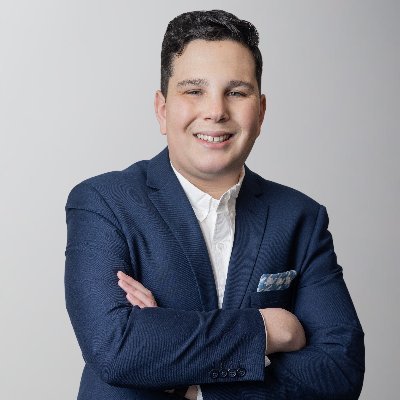
Attorney Ryan Downton of @TexasTrialGroup, which is working with multiple athletes in Louisiana lawsuit, tells @On3: “The SEC’s actions put the NCAA in contempt of multiple court orders. It is cartel-like conduct when NCAA conferences attempt to create their own spur of the moment rules in response to Courts enjoining those same rules at the NCAA level.” t.co/W1681VXcTx
Legal commentators, including the College Football Nerds account, immediately pushed back on that framing. Their argument: the SEC isn't a party to the Louisiana case and isn't the NCAA's legal agent, since agency requires the NCAA to actually control the SEC's decisions — which it doesn't. They also argued a straight antitrust claim is a much heavier lift against conferences acting independently than it would be against the NCAA, which doesn't face the same kind of competition.
To elaborate a bit further, the argument for contempt is essentially “the NCAA should be punished for not forcing the SEC to follow the TRO.” That argument very likely has no basis in law if the SEC is a separate entity and not the NCAA’s agent (which is a legal term here).
There's a separate, more philosophical argument bubbling up too. Pete Fiutak framed the ban as unfair since playing in the NFL is just a job, no different than working retail before coming back to school — a take College Football Nerds answered by pointing to the amateur/pro line itself: once you've been paid to play the sport, the argument goes, you're not an amateur in it anymore, full stop. Nobody involved thinks this gets resolved quietly. With the SEC leaning on Commissioner Greg Sankey's broad enforcement power and plaintiffs' attorneys now openly using the word 'contempt,' this is heading toward an actual courtroom test of whether conferences can rewrite eligibility rules faster than judges can strike them down.
More Stories
Mike Elko TexAgs cesspool comments after Missouri loss
Indiana beats Nebraska 20-17 for 22nd straight win
Austin Siereveld out: Ohio State OT misses Maryland game
Kadin Semonza starts at quarterback for Tulane vs. Army
Nick Poulos expected to start Ohio vs. Central Michigan
Cayden Green injury: game-time decision vs. Texas A&M