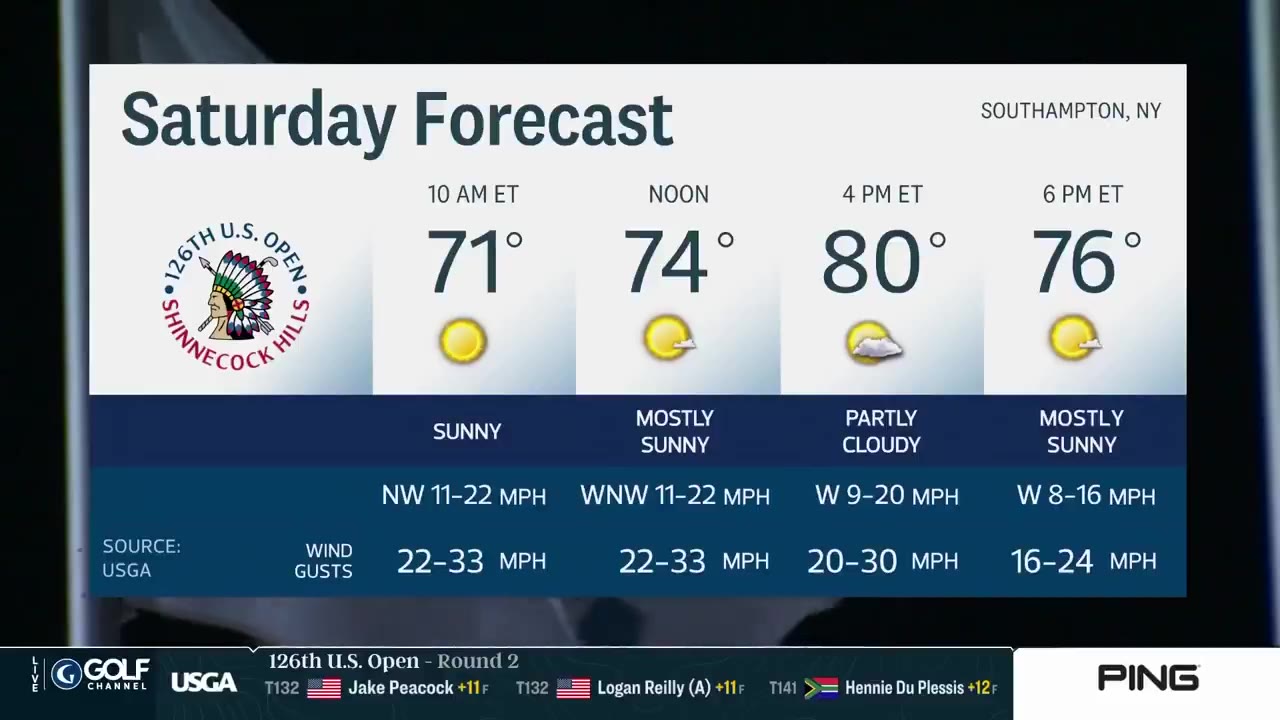
Shinnecock Hills is eating people alive in Round 2 of the 126th U.S. Open, and the USGA made a deliberate choice to let it happen. No syringing the greens overnight — meaning no moisture injected into the putting surfaces to slow them down. The result: firmer, faster conditions that are turning the back end of the leaderboard into a massacre. Players like Matt McCarty, Nick Hardy, Chase Kyes, and Graeme McDowell are grinding through scores in the +12 to +16 range, and the course is showing zero mercy.
Golf Channel's on-air coverage calling out the no-syringe setup decision — and ForePlay's enthusiastic co-sign.
Syringing is essentially the USGA's safety valve — a way to pump the brakes on a course that's getting too fast, too unpredictable. Shinnecock has a history here. The 2004 U.S. Open at this same venue became infamous when the greens got so firm and quick that the USGA actually watered them mid-round on Sunday to make them playable again. It was a PR disaster. So when the USGA signals it won't syringe this week, it's a statement: we're letting the course be a proper U.S. Open test, not a managed one. ForePlay's reaction — "Hell yes" — basically speaks for every golf fan who wants to watch Shinnecock do what Shinnecock does.
The brutal setup makes cut-making a legitimate accomplishment this week. 17-year-old amateur Miles Russell grinding through 36 holes and actually making the cut is the perfect illustration of just how hard these conditions are playing.
Miles Russell, 17 years old, finishes his second round and embraces his caddie after making the cut at +3.
At the top, Wyndham Clark is sitting at -7 and separating himself from the field while the cut line tells you everything you need to know about the test Shinnecock is presenting. The USGA taking the bold stance of keeping greens firm and fast — and Golf Channel acknowledging it on air — is exactly the kind of course management decision that makes a major feel like a major. The U.S. Open is supposed to hurt. No syringing, no mercy.