

College football buyouts take over retention talks

TLDR: On3's Pete Nakos reports that buyouts will be a major part of college football's next round of retention talks, and one Power Four starting QB's multiyear deal already carries a penalty to break it.
The portal window is still months off, but Nakos says the real fight starts in the coming weeks, behind closed doors.
The next transfer portal cycle will start to take shape behind the scenes in the coming weeks. Retention talks are coming. Buyouts are becoming a major factor. And programs are already figuring out how far they’re willing to go to enforce them. Read: t.co/LBg5xWDaby
 On3@On3
NEW: College football players’ buyouts are about to take center stage as retention talks begin in earnest over the next two to four weeks, @PeteNakos reports💰 "Half the people think the buyouts aren’t legally enforceable. The other half don’t report them. The other half fight them. If you really need a player bad enough, you’re not going to let a buyout hold you back," an SEC front office operator said. Story: t.co/YG0Owecb1g
The rev-share era was supposed to put some order into all this. Schools are now paying players directly, and they want something in return: a way to make leaving cost money. That is what the buyout is. A program hands a kid a multiyear deal, and if he walks to a bigger offer in December, part of that money comes back. Nakos went through rev-share contracts and talked to industry sources, and the answer he got is not the one athletic directors want to hear.
College football’s next round of roster negotiations is about to begin — and buyouts will be a major part of it. Reviewed rev-share contracts and spoke with industry sources about why buyouts exist and whether they will hold back transfer activity. "The buyouts have some teeth, but do they stop a guy from leaving you? No." Read: t.co/ToBxWH9Zk2
On3@On3NEW: College football players’ buyouts are about to take center stage as retention talks begin in earnest over the next two to four weeks, @PeteNakos reports💰 "Half the people think the buyouts aren’t legally enforceable. The other half don’t report them. The other half fight them. If you really need a player bad enough, you’re not going to let a buyout hold you back," an SEC front office operator said. Story: t.co/YG0Owecb1g
"Do they stop a guy from leaving you? No." That line is the whole story. A buyout makes a transfer more expensive. It doesn't stop one. If the next school, or its collective, will just cover the number, a buyout is a speed bump for the player and a negotiating chip for the school. The headline example is a Power Four starting quarterback whose multiyear deal includes a penalty to break it, and Nakos's source described it as basically handing back what he was paid for that year.
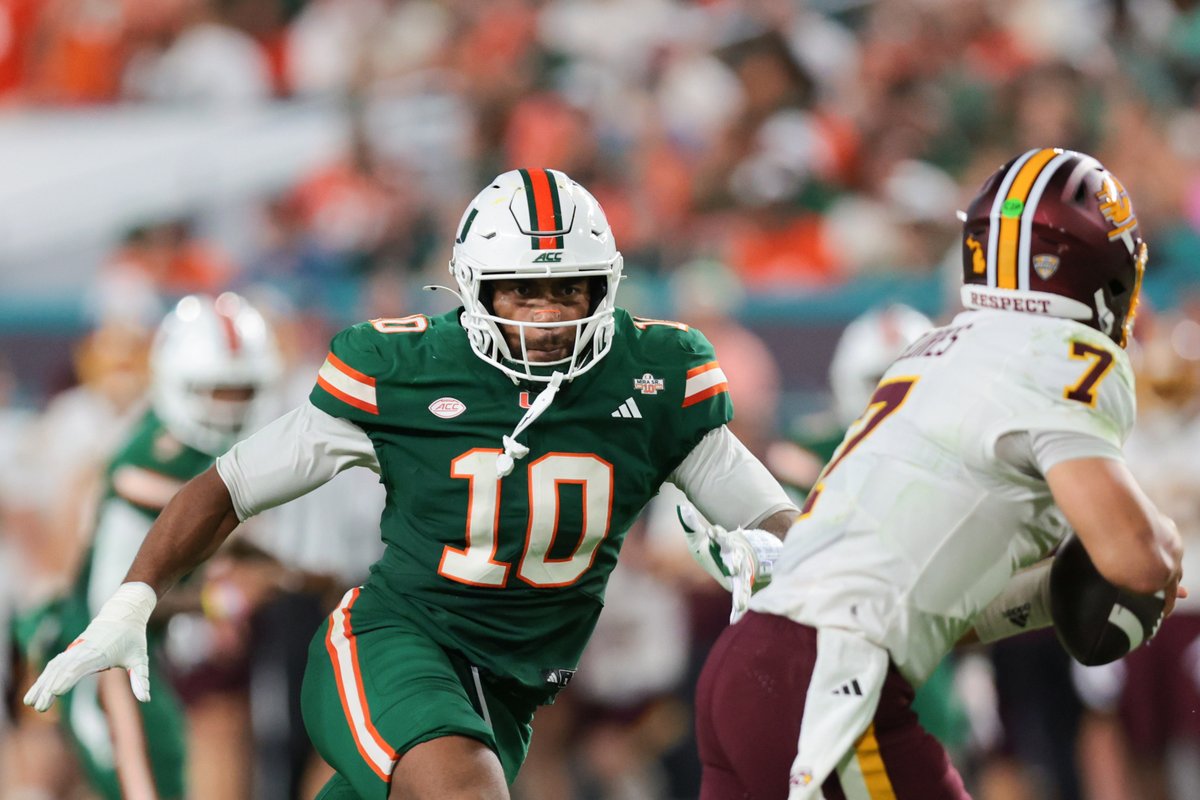
Then there's enforcement, which is where this gets ugly. Nakos points to Miami EDGE Damon Wilson, now on his 3rd school in 3 seasons, who is still in a legal fight with Georgia over liquidated damages from his NIL collective contract after he left the Bulldogs for Missouri.
Miami EDGE Damon Wilson is at his third school in three seasons. He’s still in a legal dispute with Georgia over liquidated damages from his NIL collective contract when he left the Bulldogs for Missouri. Sources told @On3 the two parties could head to arbitration soon. More on CFB buyouts:
 On3@On3
NEW: College football players’ buyouts are about to take center stage as retention talks begin in earnest over the next two to four weeks, @PeteNakos reports💰 "Half the people think the buyouts aren’t legally enforceable. The other half don’t report them. The other half fight them. If you really need a player bad enough, you’re not going to let a buyout hold you back," an SEC front office operator said. Story: t.co/YG0Owecb1g
The Wilson case is the warning label on every one of these contracts. Georgia's athletic association says Wilson signed a 13-month, $500,000 deal with the Classic City Collective in December 2024, then entered the portal weeks later, and it went after $390,000 under the liquidated damages clause. Wilson's side argues he only signed a non-binding term sheet, not a contract. Nakos's sources say the 2 sides could be headed to arbitration soon. Nearly 2 years on, it still isn't settled, and Wilson has changed schools again in the meantime. That tells you how much teeth these clauses really have.
So here's what to watch over the next few weeks. Programs have to decide whether they'll actually go after a departing player the way Georgia did, or whether the buyout is just a number they wave around during retention talks. Players and agents have to decide whether a payback penalty is worth signing for the guaranteed money. And the schools with the deepest pockets will find out whether eating someone else's buyout is just the new cost of building a roster. Either way, the next portal cycle is going to involve a lot more lawyers.
More Stories
Baylor Hayes returns from knee injury to start vs. North Texas
Isaac Smith injury: Mississippi State safety probable vs. Alabama
Greg Byrne signs Alabama contract extension through 2033
Protect College Sports Act Senate vote delayed
Derek Mason reprimanded by Conference USA over officiating
Collin Simmons restroom penalty costs Texas 15 yards vs. Tennessee