
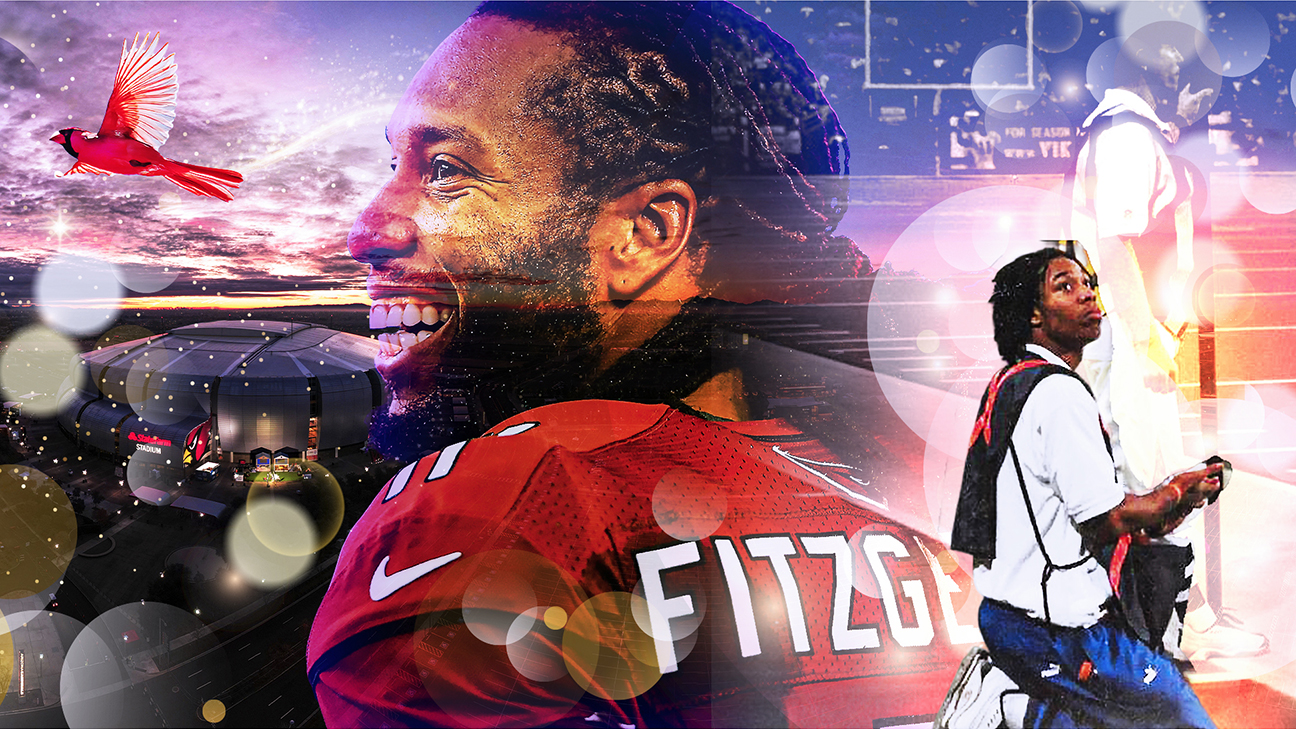
Every Hall of Fame bio has an origin story, but Larry Fitzgerald's is the rare one that survives the retelling: fired as a Vikings training camp parking attendant in 1999 for breaking curfew, then rehired a week later by head coach Dennis Green as a ball boy assigned to the wide receivers. That reassignment put a teenage Fitzgerald in the same meeting rooms, film sessions and practice reps as Randy Moss and Cris Carter, two future Hall of Famers who treated him, in his own words later, like family.
The apprenticeship was not symbolic. Fitzgerald caught passes off the Jugs machine after practice with receiver Matthew Hatchette, ran extra routes for backup quarterbacks looking for reps, and wore gloves in drills to match the pros around him. Carter called him "a student of information" who chased it to an addictive level. That is not a scouting report. That is a habit formed at 16 years old that never left him.
The rest is franchise history for two teams. Green left Minnesota in 2002 and turned up in Arizona. Two years later, holding the third overall pick in the 2004 draft, he took the kid who used to fetch his receivers' footballs. Fitzgerald later admitted the quiet part out loud: without that relationship, he does not go third overall to a rebuilding Cardinals team. Seventeen seasons, 1,432 catches, 17,492 yards and 121 touchdowns followed — top-two and top-six marks respectively in NFL history. He goes into Canton this Saturday, with Carter delivering the introduction that started in a Vikings meeting room 27 years ago.
None of this moves anyone's fantasy roster this week — Fitzgerald has been retired since 2020, and this is a legacy story, not a snap-count story. But the induction lands at an interesting moment for the receiver room he built his legend in, and it is worth using as an excuse to check in on it.
Marvin Harrison Jr. is the closest thing the Cardinals have to a Fitzgerald-caliber pedigree at receiver, and his fantasy stock tells the story of how hard that standard actually is to hit. He came into 2024 as the highest-drafted rookie ADP wide receiver in recent memory, slid to roughly WR18 territory for 2025, and is now getting drafted closer to WR32-36 this summer — a legitimate value range if the talent ever clicks, but a real signal that the marketplace has stopped pricing him as a sure thing. If you are drafting him anywhere outside the mid-rounds banking on a Fitzgerald leap, you are the one taking the risk, not the market.
The betting markets are not much kinder to the supporting cast. Arizona is currently pegged for a season win total around 3.5, with sportsbooks favoring the under and pricing the Cardinals as the team most likely to finish with the league's worst record. That is the backdrop for every skill-position projection in this offense: negative game scripts, likely low offensive snap totals in competitive windows, and a passing game that will lean on volume more than efficiency to produce fantasy points. Handcuff and streaming decisions out of Arizona should be made with that ceiling in mind all season.
The dynasty angle is the more interesting one. Fitzgerald's career is the reminder that receiver value compounds over time when the habits are right — he was still producing at an elite level into his mid-30s because of exactly the kind of preparation he picked up as a ball boy. That is a useful gut-check for anyone stockpiling rookie receivers off name value alone. Harrison Jr., Hollywood Brown and whoever ends up throwing them the ball in Arizona are all being valued right now on projection, not proof. Fitzgerald's bust goes up in Canton as a reminder of what the finished product actually looks like.
Nothing here changes a Week 1 lineup. But Hall of Fame weekend is as good a checkpoint as any to separate the receivers you are paying for on potential from the ones who have actually earned it — and to remember that even the greatest ones needed a lucky break, a mentor, and a decade of unglamorous reps before the numbers showed up.