






Pete Alonso's go-ahead homer ruled foul against Yankees
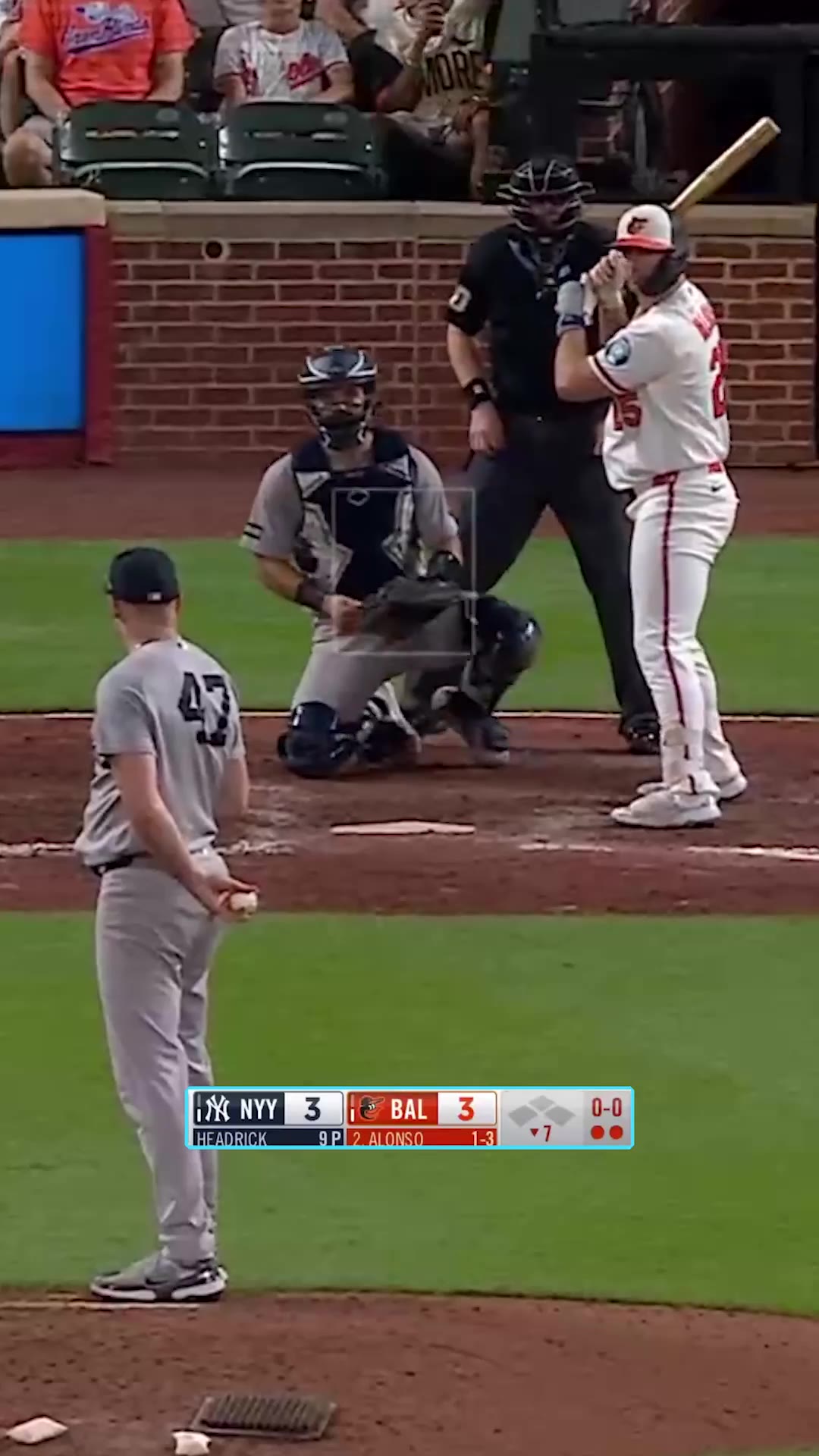


Pete Alonso hit a ball down the left field line with the game tied in the seventh inning, and for a second it looked like the kind of moment the Orioles paid $155 million for. Then the third-base umpire called it foul, MLB's Replay Operations Center reviewed it, and the call stood anyway -- not because the review confirmed it was foul, but because the league couldn't definitively prove it was fair.

What would have been the go-ahead home run from Pete Alonso was upheld as a foul ball after review
That's the part that set off national baseball writers. Jon Heyman didn't hold back, calling the non-overturn "inexplicable" given that the replay official himself admitted he couldn't tell for sure whether the ball was fair.

Pete Alonso’s go-ahead home run was ruled foul even by the replay official. Technically, they said they couldn’t tell for sure. So the the bad call stood. Inexplicable.
Heyman's follow-up hit the real nerve: MLB has pitch-tracking precise enough to call balls and strikes down to a quarter of an inch, yet still has no system that can conclusively settle whether a ball left the yard fair or foul. It's the same gap Alonso himself flagged after the game, floating an NFL-style pylon camera or a laser mounted on top of the foul pole as an obvious fix. Orioles manager Craig Albernaz went further, noting the dugout's own ball-tracking data on the iPads showed the ball fair in real time -- technology his own team has access to that the umpires apparently don't.
The Opener: Alonso's Near-Homer, Cavalli, deGrom t.co/aBzadgrVvo

The context matters here. Alonso left the Mets this past offseason for a five-year, $155 million deal with Baltimore, the richest contract for a first baseman in the sport and the biggest swing the Orioles have taken to try to build a real contender around their young core. A disputed home run in a tied game against the Yankees isn't just a bad beat -- it's exactly the kind of swing that decides whether that investment looks smart in October.
New York scored twice in the eighth and closed it out 5-3, dropping Baltimore to 61-66 and 1.5 games back of the third AL Wild Card spot. Alonso still went deep earlier in the game, so the night wasn't a total loss on the stat sheet, but the disallowed homer is the one everyone's still talking about. Even Yankees broadcaster Michael Kay reportedly conceded on the call that it looked fair -- which tells you how thin the case for "foul" actually was.
MLB's rule is clear on paper: without clear and convincing evidence to overturn a call, the original ruling stands, no matter how close it looks. The problem is that standard was built for balls and strikes, tag plays, and other calls where multiple camera angles usually settle things fast. Fair-foul calls down the line, it turns out, are exactly the blind spot nobody built a fix for -- and until MLB spends the money on it, expect this exact controversy to happen again the next time a ball hugs the pole in a big spot.
More Stories
Jackson Chourio 4 hits, Brewers beat Rays 10-0 in Game 3
Aaron Ashby scoreless streak nears postseason record
Mariano Duncan hired as Mets major league coach
Jackson Chourio throws out Liam Hicks at home in Game 2
Liam Hicks home run Rays vs. Brewers World Series Game 2
Christian Yelich RBI triple World Series Game 1 Brewers